Source RFID EAS Deactivator for Supermarket Garment Store Warehouse
Compare 30 RFID EAS Deactivator models from global suppliers. Buyers can evaluate AM, EM, and RF systems with varying detection ranges, voltages, and certifications for retail and warehouse security applications.
Key considerations
Products List




Comprehensive Sourcing Guide
Strategic Sourcing Guide for RFID and EAS Deactivator Systems
Navigating the procurement landscape for Electronic Article Surveillance (EAS) deactivators requires a precise understanding of the underlying technology, as the market is fragmented by frequency standards and detection mechanisms. The core keyword "RFID EAS Deactivator" often conflates distinct technologies: Radio Frequency (RF), Acousto-Magnetic (AM), and Electromagnetic (EM) systems. While true RFID deactivation is a specific subset, many procurement requests actually target the broader category of EAS deactivators used in retail environments. This guide synthesizes observed product attributes, technical specifications, and compliance requirements to assist buyers in selecting the correct hardware for their specific retail ecosystem.
Technical Architecture and Frequency Standards
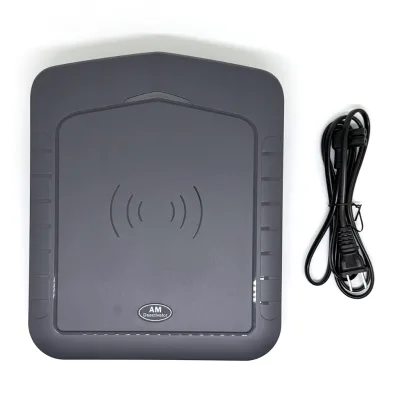
The primary differentiator in EAS deactivator procurement is the operating frequency, which dictates compatibility with the security tags in use. The supplied product data reveals a clear segmentation across three distinct technological families. The Acousto-Magnetic (AM) system operates at a frequency of 58kHz. Products utilizing this design are characterized by a detection signal described as "Acusto Magnetic" and are often designated with model prefixes such as "AM" or specific identifiers like "TH-300." These units typically feature a detection range of 80-120mm and are constructed with dimensions around 200mm x 240mm x 90mm. The physical footprint and power requirements are critical for integration into checkout counters.
In contrast, the Electromagnetic (EM) system relies on a different detection signal mechanism. These units are designed with an "EM" system architecture and often operate with power inputs of 50 Hz 220V or 60 Hz 110V. The deactivating power for these specific models is noted to be ≤30W, while reactivating power may be ≤60W. The physical dimensions for EM deactivators vary, with some controller units measuring 360 x 170 x 180 mm, while others, such as the TH-200 model, measure 272 x 225 x 108 mm. The color options for these units generally include white and black, though customization is available.
A third category involves Radio Frequency (RF) systems, which operate at 8.2MHz or dual frequencies of 8.2MHz/58kHz. These units are often classified as "EAS Accessories" and feature a detection area ranging from 10-15cm to 30-80cm. Some portable or specialized RF units operate on a DC 7.4V 3300mAh battery, with dimensions of 340 x 80 x 50 mm. These devices often include a low-voltage indication feature, signaled by a yellow light flash, to alert operators of battery status. The detection distance for these specific RF models can extend from 0.9m to 1.2m.
| System Type | Operating Frequency | Detection Signal | Typical Power Input | Common Dimensions (mm) |
|---|---|---|---|---|
| Acousto-Magnetic (AM) | 58 kHz | Acusto Magnetic | Standard AC (Varies) | 200 x 240 x 90 |
| Electromagnetic (EM) | Varies | Electromagnetic System | 50Hz 220V / 60Hz 110V | 360 x 170 x 180 / 272 x 225 x 108 |
| Radio Frequency (RF) | 8.2 MHz | Radio Frequency RF | DC 7.4V (Portable) | 340 x 80 x 50 |
Compliance and Certification Verification
When sourcing EAS deactivators, verifying compliance with international safety and quality standards is paramount. The observed product data indicates that a significant portion of available units carry CE certification, which is a mandatory requirement for products sold within the European Economic Area. Beyond CE, several products list SGS and ISO certifications, suggesting adherence to broader quality management and safety testing protocols. One specific entry notes a combination of SGS, CE, ISO, and RoHS certifications, indicating a comprehensive approach to environmental and safety compliance.
Buyers must treat these certifications as observations of specific listed products rather than universal guarantees for all deactivators in the category. The presence of an HS Code (85319010) is consistent across the data, identifying the product class as parts of sound or visual signaling apparatus. However, the specific standard compliance (e.g., ISO 9001 for quality management) should be verified on a per-supplier basis. The "Quality Control" attribute mentions a protocol of "4 Test During The Production Before Delivery," which serves as a procedural standard rather than a third-party certification. Buyers should explicitly request copies of valid certificates for CE, SGS, and ISO to ensure the specific batch being purchased meets current regulatory requirements.
Cost Drivers and Procurement Economics
The economic structure of EAS deactivator procurement is influenced by several variables, including customization, volume, and technical complexity. The observed Minimum Order Quantity (MOQ) ranges widely from 1 piece to 1000 pieces. This flexibility suggests that the market accommodates both small-scale retailers seeking single-unit replacements and large chains requiring bulk deployment. The listed price range in USD spans from 0.2 to 300, a variance that reflects differences in technology (AM vs. RF), power requirements, and build quality.
Customization is a significant cost driver. The data confirms that customization is available for attributes such as color (Black/Gray or Customized) and potentially dimensions. Customized orders often incur higher unit costs and may have different MOQ thresholds compared to standard off-the-shelf models. Payment terms observed include T/T, PayPal, and Western Union, indicating a reliance on standard international trade finance methods. Lead times are not explicitly defined in the data, but the "One PCS in a Carton" or "One PCS/Box" packing details suggest that packaging is standardized, which can influence shipping costs and logistics planning. Buyers should note that while low-cost options exist, the price point must be weighed against the reliability of the detection signal and the durability of the deactivator in a high-traffic retail environment.
Operational Applications and Deployment Scenarios
The versatility of EAS deactivators allows them to be deployed across a diverse range of retail sectors. The observed applications include garment stores, supermarkets, shopping arcades, video stores, bookstores, jewelry stores, and warehouses. This breadth of application underscores the importance of matching the deactivator type to the specific merchandise. For instance, AM systems are frequently associated with garment stores due to their robustness against false alarms, while RF systems are often utilized in video and bookstore environments where tag compatibility is specific.
The detection range is a critical factor in deployment. Units with a detection range of 80-120mm are suitable for compact checkout counters, whereas models with a detection distance of 0.9-1.2m offer greater flexibility for larger aisles or warehouse entry points. The "Center Frequency" attribute, which can be 8.2MHz or 58kHz, further dictates the environment; high-frequency RF tags are common in electronics and media, while AM tags are prevalent in apparel. The ability to customize the system design ensures that the deactivator can be integrated into existing store layouts without disrupting the flow of customers.
Supplier Evaluation and Quality Assurance
Evaluating suppliers for EAS deactivators requires a focus on production capabilities and quality assurance protocols. The origin of the products is consistently listed as China, which is a major manufacturing hub for electronic security components. When assessing potential suppliers, buyers should verify the "Quality Control" processes. The data mentions a specific protocol of four tests conducted during production before delivery. This internal QC measure is a positive indicator but should be supplemented by third-party audit reports.
Suppliers should also be evaluated on their ability to meet the "Standard" requirements, such as CE and SGS. The presence of an SGS standard in the product attributes suggests that the manufacturer has undergone external verification. Buyers should inquire about the specific scope of these certifications to ensure they cover the manufacturing facility and the specific product model. Additionally, the "System Design" attribute (AM, EM, or RF) should be matched against the supplier's core competency. A supplier specializing in AM systems may not offer the same depth of expertise in RF technology. The "Market" is listed as Global, indicating that suppliers should have experience with international shipping and compliance, but buyers must confirm that the supplier can support their specific regional regulatory needs.
Long-Term Procurement and Maintenance Considerations
Sourcing EAS deactivators is not merely a one-time transaction but involves long-term considerations regarding maintenance, power stability, and future scalability. The power specifications vary significantly, with some units requiring 50Hz 220V or 60Hz 110V, while others utilize DC 7.4V batteries. For battery-operated units, the "Low-Voltage Indication" feature (Yellow Light Flash) is a critical maintenance tool that prevents operational downtime. Buyers should ensure that the deactivator selected includes clear indicators for battery status and power failures.
The "Dimension" and "Packing Details" (One PCS/Carton) are essential for long-term logistics. Standardized packaging facilitates easier storage and replacement part management. However, the "Carton Size" of 29 x 23 x 12.5 cm for certain models highlights the need for efficient warehouse space planning. As retail environments evolve, the ability to customize the deactivator (e.g., color, branding) becomes increasingly important for brand consistency. Buyers should also consider the "Reactivating Power" and "Deactivating Power" ratings to ensure energy efficiency, especially in high-volume stores where deactivators operate continuously.
Final Sourcing Recommendations
In conclusion, the procurement of RFID and EAS deactivators demands a meticulous approach to matching technical specifications with operational needs. The market offers a wide array of options ranging from 58kHz AM systems to 8.2MHz RF units, each with distinct power requirements, dimensions, and detection ranges. Buyers must prioritize verification of certifications such as CE, SGS, and ISO, treating them as specific product attributes rather than universal guarantees. The wide MOQ range of 1 to 1000 pieces allows for flexible entry into the market, but cost drivers like customization and power type must be carefully analyzed. By focusing on the specific application environment—whether a garment store, supermarket, or warehouse—buyers can select a deactivator that ensures optimal security performance while maintaining operational efficiency. The consistent origin from China and the availability of global market support provide a stable foundation for sourcing, provided that rigorous quality control and compliance checks are maintained throughout the procurement process.
FAQs
What frequencies do rfid eas deactivators operate at?
These devices operate at specific frequencies like 58kHz for Acousto-Magnetic systems or 8.2MHz for Radio Frequency systems. Some models support dual frequencies of 8.2MHz and 58kHz to ensure compatibility with various security tags used in retail environments.
Which certifications are available for these deactivators?
Available certifications include CE, SGS, ISO, and RoHS for specific product models. Buyers should verify these certifications on individual listings as they are product attributes rather than universal guarantees for all units in the category.
Can I customize the color of the deactivator unit?
Yes, customization is available for attributes such as color, including options like Black, Gray, or other custom colors. This customization option allows retailers to match the device to their specific store branding or interior design requirements.
What is the minimum order quantity for purchasing these units?
The minimum order quantity ranges from 1 piece to 1000 pieces depending on the supplier and model. This flexibility accommodates both small retailers needing single replacements and large chains requiring bulk deployment for their entire network.
Where are these rfid eas deactivators manufactured?
The products are manufactured in China, which is a major hub for electronic security components. The global market availability suggests suppliers have experience with international shipping and compliance requirements for various regions.
How is the packaging handled for single unit orders?
Packaging typically consists of one piece per carton or box, with specific carton dimensions provided for logistics planning. Standardized packaging facilitates easier storage and replacement part management for retailers of varying sizes.